
The Internet as a Hellish Space
Serial Experiments: Lain, Hungry Ghosts, Touching Grass

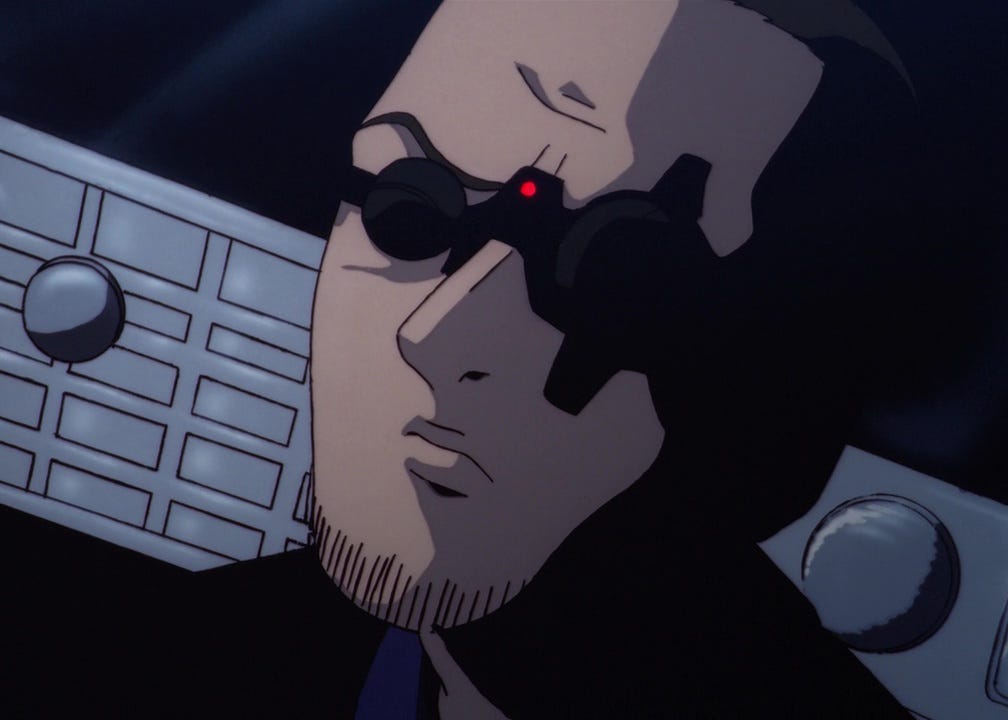
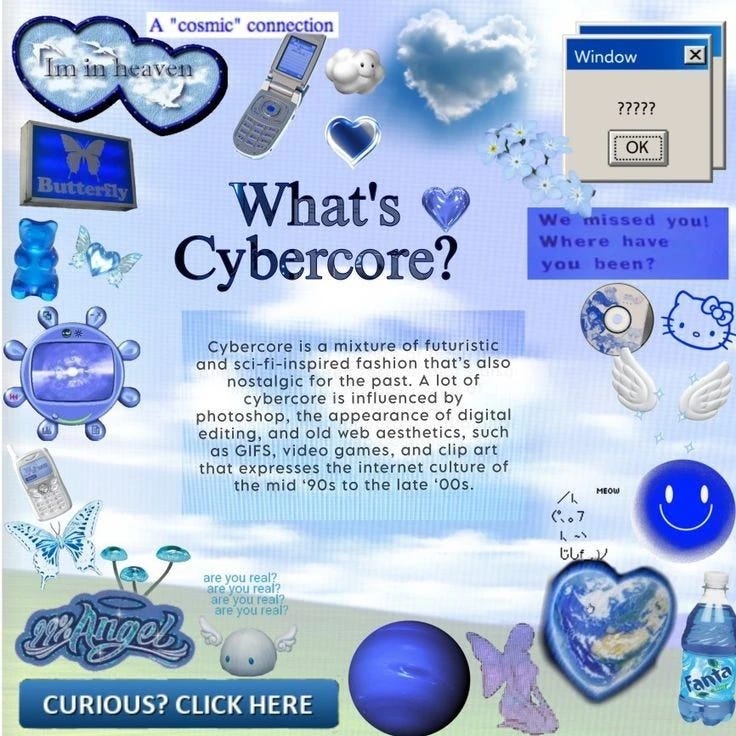
I recently finished Serial Experiments: Lain. It’s a pretty good show, and I feel it is extremely relevant to much of my audience, but it is most relevant to myself. It’s about a young girl named Iwakura Rein (“Lain”), who becomes deeply immersed in something called The Wired after she receives messages from the dead in this virtual space. We are also shown early-on in the show the many victims of the wired, people who lose their grip on the distinction between reality and the wired, and end up going mad over it. Some of them just straight-up lose their minds, while others are implied to perhaps dispose of their real bodies after attempting to transfer themselves into cyberspace. The Wired is pretty clearly supposed to be the in-universe equivalent of the worldwide web, and it is never fully clarified to what degree it is a virtual reality, and to what degree it is more like our own web. I prefer to imagine it as mostly reminiscent of our own web, just being poetically re-imagined as a highly immersive VR experience. The aesthetics of the show are very charming and nostalgic, with the entire wired having an aesthetic which I would describe as “Late Y2K”, but apparently it actually has its own title called cybercore. You can definitely see the very early influences of Frutiger Aero appearing in it.
The show was extremely ahead of its time, coming out in 1998 but predicting the massification of the internet over a decade and a half later. People usually believe this was inevitable, but I don’t think it was. The use of the internet for practical communication was inevitable, but the immersion of ones self into an online profile somewhat detached from the real world self was something only a fraction of Zoomers and Millennials did before Coronavirus forced everyone into their homes. It could have remained a niche way of life all the way into the age of AI, which I consider the beginning of the end for Social Media (god-willing).
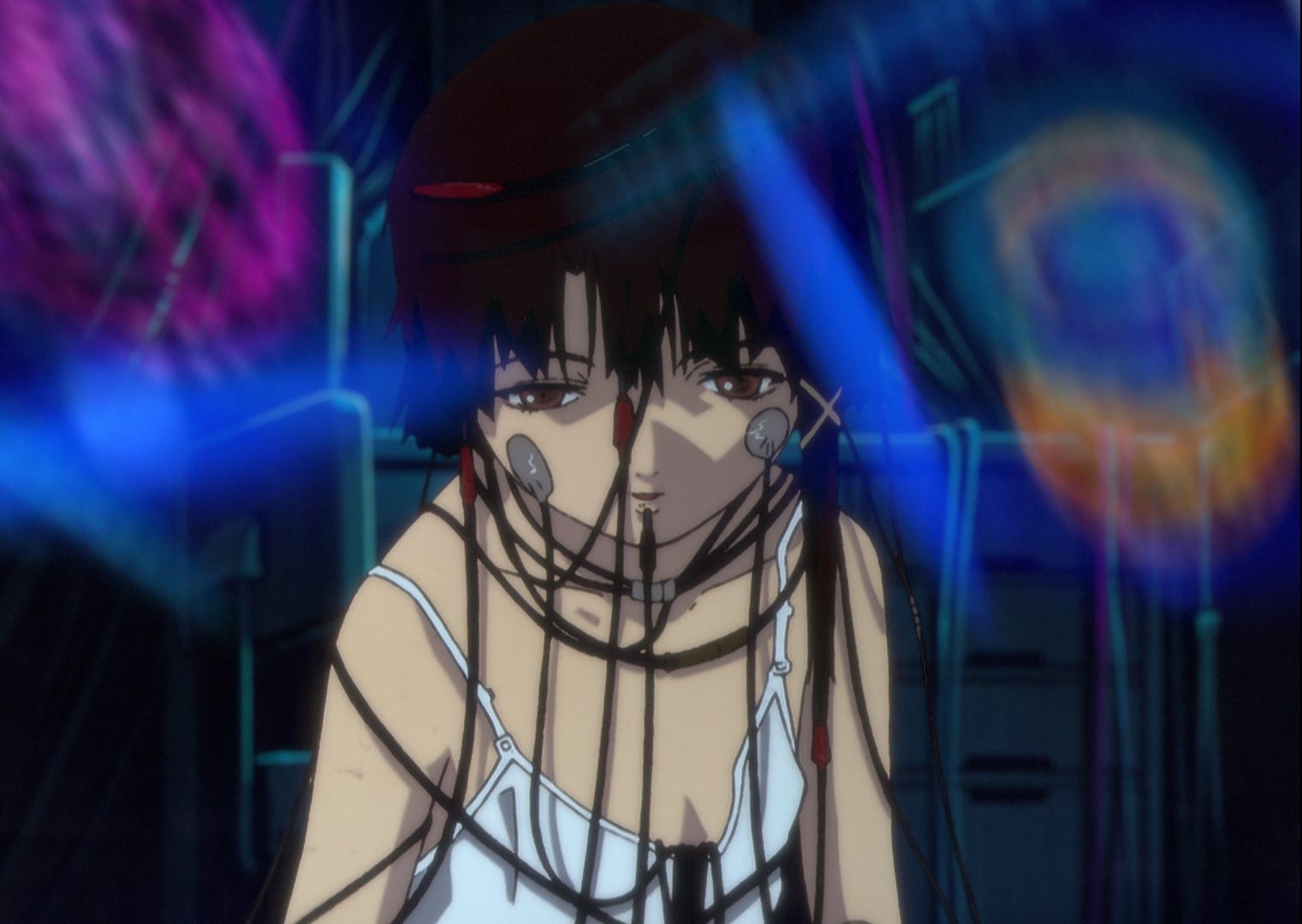
As the show goes on, the “Lain of the Wired” is differentiated from the Lain of the real world. In the real world, she is meek and kind of boring, while she is such a powerful personality on the wired that she ascends to become a sort of cyber-messiah. One unrealistic element of the show is that people like Lain are able to greatly vivify the internet experience through the purchase of expensive hardware modifications for their “rigs”. Lain’s room gradually transforms from a normal room with a personal computer in the corner, to a safety hazard of cooling valves, jumbled wires, and PC hardware, with Lain being literally hooked up to the computer through brain wave sensors.
In the show, scientific study of the supermundane and psychokenetic-telepathic abilities is serious. In the real world, PSI is handwaved away as poppycock by most scientists, which leaves us completely unable to actually bridge the gap between the mental world and the physical world. I think we will discover most things in science-fiction that are physically possible before we discover how to “transfer” our experience into the web, or extract our mental experience into the form of physical, interpretable information. We’re probably going to discover how to travel faster than light, reverse aging, and terraform other planets before we discover how to “upload ourselves” into something, because at least we know something about these things scientifically. We know a lot about the speed of light, we know about relativity, and we know why things can’t travel faster than it, which allows us to look for loopholes. We know nothing scientific about consciousness or qualia, and there is no evidence that qualia or consciousness have a physical existence. Because of this, it makes a lot of sense that people can basically upload themselves into the Wired in the show, a universe where consciousness is understood semi-scientifically, while we can’t do this in the real world. I’m hoping that the study of AI will help us come to an understanding on what exactly consciousness isn’t, but we’re not quite there yet.
As the show progresses, we are introduced to the possibility that the Lain of the Wired is actually the true Lain, and that the physical body of Lain is merely being projected into spacetime (or perhaps only the memories of certain people) by the Lain of cyberspace. Lain’s consciousness becomes the site of a proxy war between the Knights of the Eastern Calculus, an organization that wants to destroy the physical Lain and completely embrace the world of the Wired, and the Men in Black, who want to destroy the Knights and make sure that reality stays separate from the Wired. My interpretation of the end of the show is that the Knights and their cyber-god are ultimately wrong, that life in the real world is genuinely more “real” than the life in the wired (this is the point of the “heartbeat” scene, if you watched it). What makes the real world so real is that we are truly thrown into it, while actions on the wired are entirely voluntary and can only be “thrown” insofar as they threaten our standing in the real world. The show ends with Lain of the Wired erasing herself in order to halt the merge between the worlds.
I used to get in arguments with Absolutist iFunny about if Lain could defeat Son Goku. After watching the show, I can definitively say… No, she could not. Lain is, at best, a god in the wired with a somewhat magical physical extension. At worst, she literally has no physical existence at all. She is only able to reset reality insofar as memories of herself are concerned, and her powers are entirely psychical. Because of this, we can essentially consider her a manifestation of ki who is subsequently just as vulnerable to ki manipulation as a Supreme Kai or a Destroyer. Being able to erase memories of yourself in the minds of others isn’t that impressive of a feat. Shenron has been able to erase memories of others in the minds of others, and he is already weaker than Goku by the start of Dragon Ball Z.
I have seen many Transgenders self-insert as this character, “Lain”, and they seem to take pride in their existence on our real-world Wired preceding their corporeal existence. I think this sort of media illiteracy is very common among Transgenders and their ilk, and you see it with how they interact with Neon Genesis: Evangelion as well. I say Transgenders very loosely, as at this point that term can be used to describe a very broad subsection of the population that has decoupled their identity from their physical body, and suffers as a result. I thought it was pretty clear that the Wired was more like a hellish realm, rather than a heavenly one. It is an illusion within an illusion, a dependency within a dependency. It isn’t quite like hell in the Christian sense, more in the Buddhist sense, where the normal attachment and craving associated with the real world is intensified. You cannot escape attachment through making your entire existence yet more conditional, and what the Wired does is exactly that. When you are in the Wired, or the Matrix, or whatever, you do not live for the projections of ideal things onto particulars. Instead, you live for the projection of those particulars onto a strange object that is doubly particular. If the world is distinguished from heaven by conditionality, and hell is distinguished from the world by more conditionality, then the internet is almost by-definition a sort of hellish subspace. The way the Wired is depicted in the show also suggests that it is merely a hellish realm playing the part of a heavenly realm. Look at where it resides, in the shadows. In the background noise of everyday life. It resides beneath our existence, not above it. Lain of the Wired is not actually the “real Lain”, it is a sort of egregore that humanity created through its interactions in the wired, that became so powerful that the physical Lain somehow became possessed by it in almost the same way that we talk about Hitler being possessed by Wotan. Whether or not Lain actually existed as a person before this is irrelevant. More generally, the show seems to warn about the possibility of people’s online personas possessing their real selves, and literally tossing them outside of their body into a sort of sub-existence. I expressed similar feelings about my own online persona years and years ago, that it was essentially an egregore that I had completely decoupled from my actual self and merely possessed me in the act of posting.
Now, someone might respond to this with something along the lines of: “But how do you know that you aren’t already in a simulation of a real world beyond it?”, and to that I say, I don’t. However, it’s irrelevant. I know that the internet is contingent on the real world, as does everyone else, which is why it should not be escaped into as a replacement for the real world. I don’t know of this world above me, and if I did then I would likely try to escape to it even if it was a shithole. But as long as I don’t know about it, my sight of the forms is not obscured by it.
I’ve been a netizen since elementary school. I was first introduced to this world through Google+, a website that everyone knows should never have existed. It is here where I first gained the propensity of concealing my online life, after my parents got upset at me for writing an offensive joke. In Middle School, I found iFunny, and I told myself at the time that I wouldn’t let myself become friends with anyone on there. I wouldn’t make the mistakes that I made on Google+. I would just look at memes. It was around this time that I began getting into heterodox politics, too, and I would tell myself “you’ll probably grow out of this as an adult, so don’t worry about its isolating effects”.
I’m starting to think I was at least half-right, and that the fuse was just delayed out of my own stubbornness. I have come to realize that there is no fruition from being a niche internet microceleb. It’s a giant waste of time. I saw how it ended for most, and it usually isn’t pretty. Even if you manage to stay around, nothing comes of it. There’s a very low chance that the lever of history hinges on the fulcrum of a random e-chud. None of the arguments I have had with people have changed anything, it was just another way to satiate my boredom. The egregore I created had been killed. Its body, a petrified account on a dying app. Why did I continue? Why did I keep going elsewhere? I had become what the Buddhists call a Hungry Ghost. I could not let go of what was gone, so even after the death of my virtual body I kept going.
Living in the real world is nice, and I enjoy it over living on the internet even though the real world is somewhat shitty. You can feel everything, and you don’t have to trouble yourself with an “other side”. Who you are is just… Who you are. You are defined by what you do. Online, who you are is what you say, as you rarely get the opportunity to actually do anything. I’ve tried to “make” stuff, to fill this emptiness, but it always just comes off as an elaborate form of communication. Maybe it’s just that I’m getting older, more longhoused, I don’t know. The real-world event that me and many of my online friends have spent a lot of time lamenting, the end of Western Civilization due to demographic change, has already happened in an extreme form on the internet. Within 5-10 years, pretty much every social media site went from being dominated by well-to-do people from Europe and the Anglosphere, to being predominantly populated by people from the Islamic world, Latin America, and South-Southeast Asia. The language barrier has collapsed as well, due to the implementation of auto-translation and use of generative AI.

All of the insane homeless people and criminals you see in American cities have their analogues on the internet too. However, on the internet, they are usually never held accountable for their actions, either because they aren’t important enough or because it’s impossible to catch them. Likewise, the companies that play fast and loose with everyone’s data are never held accountable when it inevitably gets leaked, and people lose money or accounts over it. People don’t care enough about cyber-security in America, because they think it’s about government spying. It’s not. The problem is that companies are selling your data all over the place, but the people that it gets sold to are fallible human beings that are getting worse at their jobs as time goes on. And because of this, there is a lot of data ripe for hacking. It’s not that the people getting the data have bad intentions, it’s that there is no way to know if they have the ability to fend off those who obviously do.
Oh yeah, and old people are all over the internet now. Just like how real-life Western countries are mostly old now, which sucks. The internet has been enshittified to maximize profits and appeal to the lowest common denominator, just like in the real world, which sucks. Simply put, every “based” reason to live on the internet is no longer valid, unless you would like to run away to some small cyber-ghetto. But back to the data stuff…
The anonymous or pseudonymous web is falling apart. It’s only a matter of time until everyone has been implicated in an information breach, and even if people manage to avoid that then there is still the coming of the AI dataminer. I think, in maybe a decade or so, AI will have reached a point where a coordinated team of political activists could automate the doxing of political enemies. Scrape every major social media site, get an AI, get a list of people with problematic beliefs, and just run the AI constantly for a few years with the goal of finding patterns of speech that connect non-anonymous accounts to anonymous ones. Then, use information revealed about the anonymous person’s life to confirm the connection. You can’t just practice good opsec, or make up fake facts about yourself. You will have to go as far as to change your prose entirely, which is very hard for most people since we all have subconscious habits about the way we write.
If this doesn’t come to fruition, then it is also possible that AI will be able to do the same thing but with voice recognition. Either way, it seems like there probably isn’t a future for pseudonymity. If you want to change the world, you are much better off trying to do something in real life anyways, especially if you’re someone like me who is close in field of study to actual important developments.
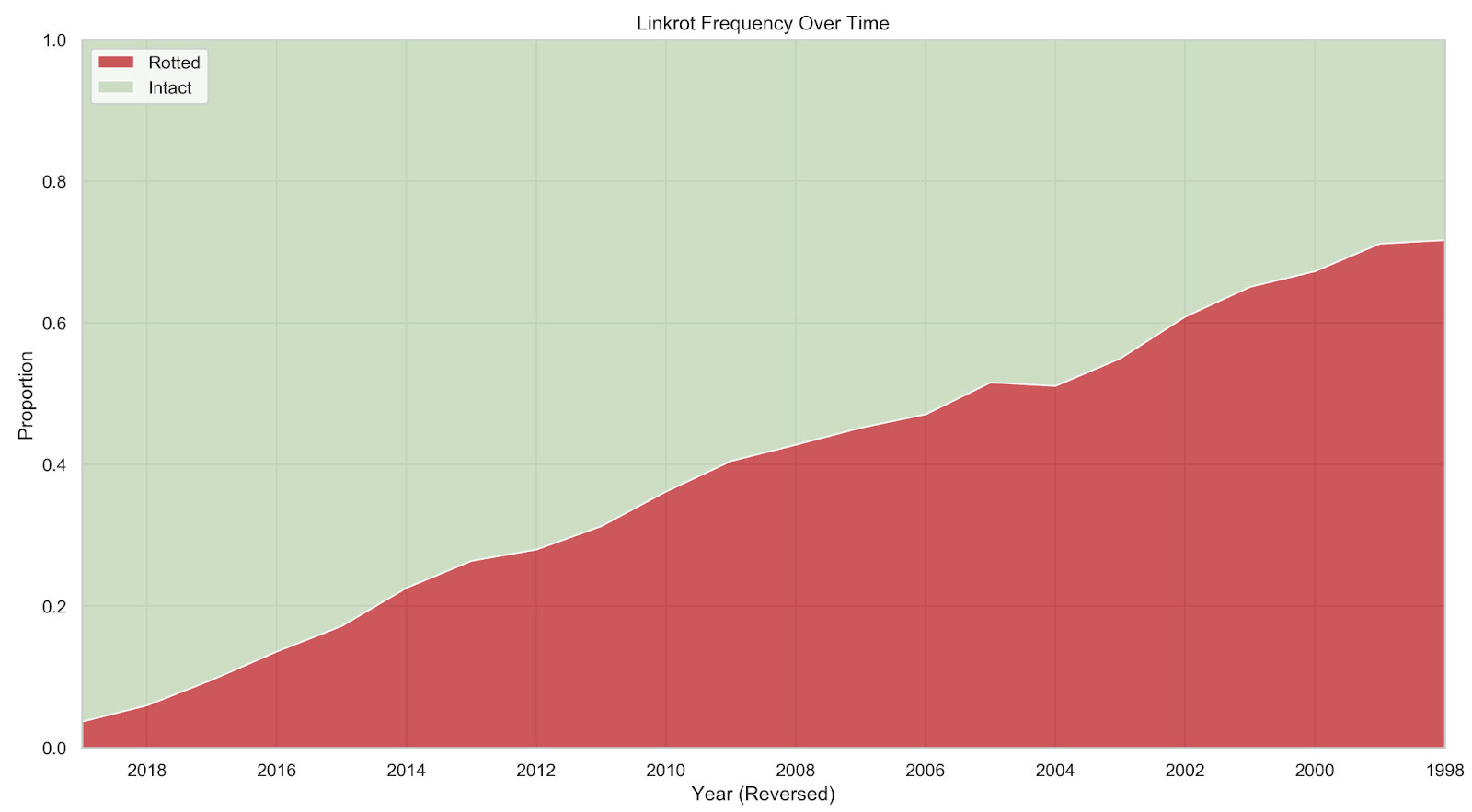
The Internet is simultaneously “forever” and completely ephemeral. Given enough time, accounts will get suspended. Or they’ll get hacked, leading to their deletion. Or the very site they are on will go under. I’ve seen four of my favorite sites go under, and I suspect that the fifth will go under within the next two years. In fact, it has already permanently lost a sixth of its content due to the incompetence of the careless developers. Substack will stay up, it’s a rising star, but it may become woke if leadership changes. The majority of URLs from 20 years ago are now link-rotted across the board.
You can archive things, but they probably won’t last forever either. Internet Archive has been facing tribulations for several years now, and I wouldn’t be surprised if one day the big one comes along and runs them out of business. Other big archive sites are not as information-preserving, more esoteric, or under assault by governments worldwide.
Things last long enough on the Internet, though. Long enough that you will have to stand by random shit you said ages ago, often times after making millions of such random statements. Because, nobody is willing to admit they were wrong on the internet. And, unfortunately, this is for good reason, because rescinding a statement just makes people criticize you more. I honestly look at many of my past statements, and view them as pretty un-nuanced. I don’t care to defend them, but I also don’t feel very comfortable taking them down. It’s not even just the statements, it’s all of the clutter. If you spend long enough online, you end up with a bunch of accounts with a bunch of actions across so many websites, that are just sitting there rotting. Your inbox gets cluttered. The risk of getting hacked increases. The natural decomposition of organic material is predictable, while the decay of items on the internet is unpredictable.
The healthiest part of the internet is actually the so-called brainrot. It’s annoying to me when some political junkie, addicted to the algorithm designed to cause him eternal anxiety and irritation, calls someone “brainrotted” for enjoying a few cheeky memes about Triple T on the ‘gram once in a while. It’s like some morbidly obese slob browbeating an otherwise healthy guy who likes to have a smoke or a pint to chill out after work. Political junky-ism has ravaged both sides of the aisle, but in different ways. For Democrats, it has mostly caused personal damage. They torture themselves with constant online politics under the impression that they are doing some moral service to the world by caring. For the right, it mostly causes damage to the party as a whole. The GOP is led by entertainment and media figures whose primary interest is in getting clicks (or selling snake-oil), leading to prioritization of entertaining and aesthetically stimulating non-issues over boring but real issues. And yes, those boring issues matter, because you have to actually win elections if you want your long-term policies to ever be implemented. Those who are not motivated by engagement farming, are motivated by satisfying their own entertainment through treating social media like an RPG. It makes engaging with politics online an eyeroll-inducing affair.
A lot of the “science” against social media is very bad, but I really have a hard time believing that it doesn’t impact your attention span. In my experience, slow-paced media has a much stronger and more lasting effect than fast-paced media (social media being a member of the latter group), but this effect relies on you not being bored while absorbing it. If you spend all of your time absorbing fast-paced media, you will suffer from chronic boredom that can only be solved by fast-paced media. It really sucks. We’re facing a boredom epidemic. Or perhaps more accurately, we’re facing an intolerance-to-boredom epidemic, because nobody has to learn to live with boredom nowadays in the way that they had to in the undeniably boring past. Living on social media isn’t necessarily gonna make you sadder, but I think whatever satisfaction you get from it is not worth the amount of very finite time you have on this earth that you are spending doing it. It isn’t gonna stick in your head, you’re probably just gonna forget about it. We remember events that happened to us best when many different types of sensory cues can be tied to the event, and “different orientation of text on a screen for a few minutes” isn’t the best cue. Not only will most of it be like dust in the wind, but it will impede your ability to make memories in the real world by competing with them for headspace at the time of occurrence. It really sucks not remembering so much. The ancients knew very well that forgetfulness is the shadow of death, because you can no longer empathize with the experience of your past self. It’s like he’s a different man. Every dead soul must bathe in forgetfulness before returning to the world, according to the Greeks.
Asking people about the effect of social media on mental health is useless anyways. Everyone interacts with it differently, and nobody knows how they would feel without it. I think, if you use social media the right way, it will make you happier and improve your mental health. It’s very difficult to know if your baseline level of anxiety is particularly high, or if it’s just what life is like, especially when your anxiety is caused by constant tiny events which you can rationalize and understand. We think of mental health as being something else from “overall wellbeing”. When you’re sad for good reasons, you’re rationally sad, and it isn’t a sign of poor mental health. When you’re sad for no reason, it is a sign of bad mental health, but if you’re spending all of your time being sad for good reasons then it isn’t necessary preferable to simply being sad for no reason at all.
I don’t plan on committing e-suicide in the near future, there are too many loose ends. Too much obligations. Too much articles I still want to write. On the timescale of years, though? Hmm. I think it would be an act of great willpower to leave it all behind. Anyways, Lain is a solid 7/10. Also, here are some articles which I feel you should read if you sympathized with me in this one:


> Simply put, every “based” reason to live on the internet is no longer valid, unless you would like to run away to some small cyber-ghetto.
And here we are, in the Substack ghetto
The hungry ghost comparison captures something really precise about how the online persona outlives itself. That whole section about creating an egregore through posting feels weirdly familar, like when I spent way too much time on forums in college and started having this unsettling feeling that the version of me people responded to had nothing to do with who I actually was. The internet-as-hellscape framing through Buddhist conditonality is sharp, especially the point about the Wired being beneath existence rather than above it. Makes me think about how many people treat their online identity as aspirational when it's maybe more accurately described as a shadow version.