
Forgotten TheWarg
Reposting some essays from a long-gone iFunny Pagan

![Burzum - 'Thulêan Mysteries' [Album Review] - V13.net](https://substackcdn.com/image/fetch/$s_!7p64!,f_auto,q_auto:good,fl_progressive:steep/https%3A%2F%2Fsubstack-post-media.s3.amazonaws.com%2Fpublic%2Fimages%2Faeff8541-7b6d-4578-bd4f-8a88d6f8b5da_1000x600.jpeg "Burzum - 'Thulêan Mysteries' [Album Review] - V13.net")
There used to be a guy on iFunny called TheWarg, and he always had some fresh and nuanced takes on Norse Paganism out of anyone on the app. Unfortunately, I believe he left well before the Banocaust, and nobody I know is in contact with him. I would very much like for him to come to Substack, but I don’t think I’ll ever see him again, for he has said that if iFunny dies he wouldn’t be found on any other sites. Because of that, I would like to repost some of his old textposts on here that I have collected.
These do not represent my opinions. I disagree with some of the things said, and cannot corroborate other things. Also, I am using image-to-text to create transcripts, but because these posts often include runes or characters not used in modern English (e.g. ‘ð’ or ‘þ’) there are definitely some typos in the text versions. So, I am also including the original post image for any needed clarification.
Textposts
The Schizo Take (his words, not mine)

One thing that I tend to think about it something Vet brings up about the Teutons and Celts. Essentially, Vet says that the two groups were robbed of religious development that would have put them on par with the Hindus and Hellenes, the chief indicator of this being the lack of monism in the two belief systems. Now I won’t speak for the Celts, but I can say in regards to the Teutons what Vet says, while good natured, is only half-true. A monism, of a sort, did develop among the Teutons but unlike the monism of other IE groups it is a strictly non-theistic monism. We do not worship God, we instead seek to understand the Runes. While the Hindus, Hellenes, Iranics, etc. all had priestly/ philosopher castes or groups that codefied the nascent monistic beliefs of the Indo- Europeans (often to their own benefit) the Teutons had no such phenomena, of their own choice. If the Teutons ever had a priestly caste it was done away with or absorbed by the “secular” lords. This was done so thoroughly there isn’t even a surviving word that means ‘priest’ in any Germanic language. Gooi comes closest, but isn’t quite it. Most likely one lord, or *Erilaz, in particular was the impetus for this. This *Erilaz instead established the Runic Cult that would spread throughout and unify the Teutonic peoples. No longer were the priests needed as intermediaries between the people and the Gods, but instead “every man should be his own priest”. But going even further, the Runes allow one to completely bypass the Gods and instead understand the Worlds at their core. But how is the Runic Cult a non-theistic monism? Strictly speaking I don’t think the Runes truly qualify as a monistic belief system. There are, after all, many Runes. However, the basic beliefs regarding the Runes are mirrored in the monistic beliefs of other IE peoples. I believe that the origin of all things are the Runes, and that the Runes form the framework of existence. If the Divine provides the flesh of existence, then the Runes provide the bones upon which that flesh is laid. All things come into existence through and are made of the Runic Forces. You, me, the Gods, the Nine Worlds, all of these are dependent upon the Runes for their existence. The Runes actually depend upon themselves to exist as well, I think. In whatever may constitute “the beginning” there was simply one Runic Force, or cyclical time. But the Runic Forces constantly seek balance and equilibrium, so the existence of necessitated the existence of I, of stagnation, which was itself dependent upon the existence of . The rest of the Rune Row came into existence in this same fashion, even creating or linear time. It was in this way existence was initially and, paradoxically, chaotically ordered. It’s not that everything is one per se, but rather that every Rune is dependent upon the other Runes for existence. Remove one, and the house of cards tumbles. Functionally they are one, but in reality they are many. Theologically, this puts the Teutons in an interesting position. The god that would have been the equivalent to Ohrmazd, Brahman, etc. takes on a different role. Woden does not become the creator of existence or synonymous with existence. He is instead the *shaper* of existence and establisher of Cosmic Order as seen when he and his brothers slay Ymir and from his corpse create our world. The echo or potential of Woden as a monistic deity can be seen in his gift of önd to the first man and woman, however. Like the Sanskrit and Avestan ātmán, önd means both “breath” and is also a fundamental aspect of the soul/self. (For the Teutons, it is just one part of many, this itself reflects the “one through many” existence of the Runes). The Anglo-Saxons even continued to use the direct etymological equivalent to ātmán which was æpm. Here we can see that Woden is a sort of Paramātman to the individual ātmán of man. This is near identical to Ohrmazd being the Paramātman and bestowing each individual with a spark of his essence, their individual ātmán. Woden as the Shaper rather than Creator does not preclude him from the Runes, however. Woden, from his humble origins as Death-God, eventually ascends the Erminsile and, in a sacrifice of himself to himself, comes to understand the Runes. This is where that “schizo take” I mentioned comes in. Essentially, I think every monistic deity of the Indo-Europeans and even beyond are not fully what they claim to be and are instead like Woden. They too mastered the Runic Forces (the names we give them are irrelevant) and used these forces to try and emulate the Runes. They were a god, but with the Runes they wanted to become God. It would be easy to say this was done malisciously or selfishly but I do not think that is the case. Rather, these gods saw the inherent disorder of the world and sought to rectify it by bringing everything under one rule and one Order, that of God. In order to protect and safeguard their position, the Runic Forces had to be hidden and obfuscated, treated as one and the same with God or else others might covet the powers for themselves. Woden though, in his perculiar nature, decided the exact opposite. Not only would all the Gods come to know these Runes but Woden would even give man knowledge of the Runes so that they too could become like him. As is mentioned in the Poetic Edda, Woden carved the Runes for both Gods and man. Man would not need intermediaries or to go through Woden for “enlightenment” and instead they would directly delve into the deep into the Runes and, in what Woden must consider the ultimate act of piety, emulate and become as him. A vitki, a master of Runes and thus of existence itself. Is this generally feasible for man? I don’t really think so, we’re too short- lived and usually too small-minded. But isn’t the opportunity itself a great gift?
Easterlings
East Asia has always been the ultimate threat to Indo-Europeans. It is no coincidence that the Wyrm, the representation of our greatest foe, is a divine symbol in the East. The threat of a small tribe of sand-dwellers only exists because we allowed them to become a threat through accepting their subversive tactics. They are not a foe that has or would withstand a true battle, as history shows. East Asia, however, has always been able to match might for might and that is why they are our greatest foe. East Asia represents the land the Indo-Europeans were never able to truly conquer or pacify. Rather it is a land that took from us that which makes us strong and used it for themselves. Just like *Ngwhi stealing the cattle. First came the Mongols, whose adoption of the ways we had largely abandoned made them a massive threat. Thankfully, we stood firm. One can include later Turkic invaders here as well, I suppose. Then came the Japanese. They used our own teachings, Buddhism, and our own creations, industrialization, to become a massive threat to the Indo-European man. The Buddhist- inspired Bushido Code of the Samurai coupled with industrialization made them an even greater threat than the Mongols. The only reason they were stopped is the fact they are a resource poor people. Had the Axis won the war I can assure you the war between East and West that would have ensued would have been monumental in scale. Thankfully, the Japanese were culturally castrated and returned to the “short submissive people” that ancient Chinese scholars described. Now we face China while we ourselves are weakened from within. They know this and they exploit this. Our only relief is the continued, but not total, incompetence of the Chinese Communist Party. We cannot guarantee these failures forever. They have the numbers and resources of the Mongols and the stolen Indo-European aspects of the Japanese. The aspirations of China also match or even dwarf those of the Mongols and Japan. This external threat coupled with our own internal strife *could* spell doom for us. A *Trito is needed to avoid this fate.
Warg’s Calendar

Most Germanic pagan calendars I’ve found are based on the Gregorian calendar with just the addition of the solstices as important days. This is wrong for two reasons: the Gregorian calendar is solar while the Germanic peoples reckoned time using lunar calendars, and the solstices themselves weren’t celebrated. Holidays were reckoned by the Moon because everything was reckoned by the Moon. Here’s a quick run down of the calendar I made for myself. Feel free to use, modify, or call this calendar retarded. All of the months begin on a full Moon. This year begins the cycle of counting the intercalary rule so there will be a Blue Moon, an extra month added to Summer to keep time properly. Winterfylleth: Began the night of October 1st. This was the beginning of Winter and the year. This is when Winternights is to begin. Blutmonth/Blotmonth: Began the night of October 31st. Ere Yule: Began the night of November 30th (tonight). December 17th is the beginning of the Yule holy nights (think German Weihnachten) and so that night is Mother’s Night. Yule lasts for 12 days with the 13th night beginning the month of After Yule. After Yule: Begins the night of December 30th. Solmonth: Begins the night of January 28th. Hrethmonth: Begins the night of February 27th. Eastermonth: Begins the night of March 28th. The night of the 28th into the day of the 29th is when Easter is held. Threemilkmonth: Begins the night of April 27th. Ere Litha: Begins the night of May 26th. This night begins Summer. Third Litha: This is the intercalary month needed to keep the calendar in check. It begins the night of June 24th. After Litha: This begins the night of July 24th. Weedmonth: This begins the night of August 22nd Holymonth: Begins the night of September 20th. The next month would be Winterfylleth and the beginning of the new year. The following year will have only 12 months following the intercalary rule. Here is the rule from Skylore of the North by O. S. Reuter:
Reincarnation
Woden actually explicitly denies the idea of reincarnation as is widely thought of or found in Hinduism, for example. When your dying day has come you or more specifically, your Hugh/ Hugr, will never again dwell in Middengeard/Miðgarðr. All things, including men, have their time and those times will and must pass. The most famous stanza of the Hávamál is: “Cattle die and kinsmen die, thyself eke soon wilt die; though fair fame will fade never, I ween, for him who wins it.” This clearly shows the Germanic (and Indo-European) conception of eternal life. However, the second and lesser known companion to this stanza then reinforces the first by denying any other form of eternal life. “Cattle die and kinsmen die, thyself eke soon wilt die; one thing, I wot, will wither never: the doom over each one dead.” No one escapes their dying day, not in this life nor through a life that is supposed to come after. We are to live on in our “deeds well done” and through our descendents. All the more reason to make the life that has been granted to you a life worth living and remembering. Do not go to your doom in misery and mourning, but with a man’s heart.
English’s Shortcomings
English is inherently suited to speaking about Germanic paganism and consistently falls short when attempting to discuss any other faith, even IE faiths. To properly understand a faith you really ought to also understand the language which developed alongside it, even if you can’t fully speak it. This does apply to English and Germanic paganism as well. Time has buried some key verbs and nouns and meanings behind what we still use that are needed for discu... My favorite example is the complete lack of a future tense in English and how we talk about the future. Firstly, the very concept of “future” is a foreign concept we had to adopt to make more sense of Christianity. And it was an incomplete adoption since we still cannot truly speak about the future. All we can say is that something will, should, or ought to happen. Never can we use a future tense to discuss something like we use the past tense. This is due to the Germanic understanding of Wyrd (fate, roughly) and time. The only definites we have are Wyrd, literally What Once Was, and Wesende, literally That Which is Becoming. Note here that “present” isn’t static but rather in a constant state of motion or becoming. Lastly, in the place where other cultures place the future we instead have Scolde which means What Should Be or What Ought to Be. Scolde itself is literally just the word Should. Scolde is not entirely predetermined but nor do we have complete free will. It is the interplay of both Wyrd and Wesende which creates, but does not determine, Scolde. Scolde is neither infinite possibilites nor a static, single path. We all exist in the myriad yet limited number of possibilities between these two extremes, neither having our path determined nor having the complete free will to determine it ourselves.
Runes and the Trifunctional Hypothesis
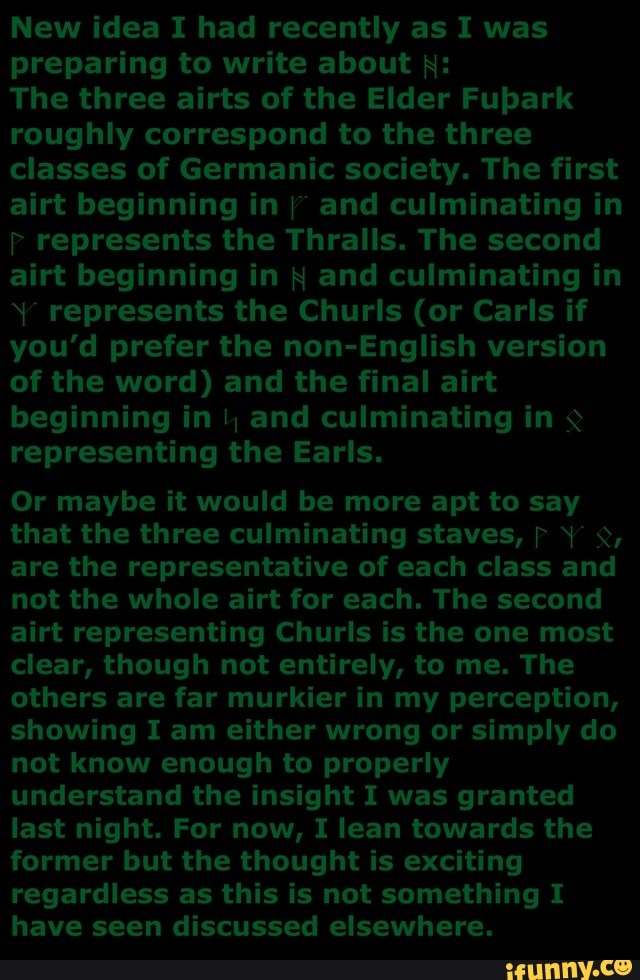
New idea I had recently as I was preparing to write about N: The three airts of the Elder Fuþark roughly correspond to the three classes of Germanic society. The first airt beginning in and culminating in P represents the Thralls. The second airt beginning in N and culminating in Y represents the Churls (or Carls if you’d prefer the non-English version of the word) and the final airt beginning in 4 and culminating in representing the Earls. Or maybe it would be more apt to say that the three culminating staves, PYr are the representative of each class and not the whole airt for each. The second airt representing Churls is the one most clear, though not entirely, to me. The others are far murkier in my perception, showing I am either wrong or simply do not know enough to properly understand the insight I was granted last night. For now, I lean towards the former but the thought is exciting regardless as this is not something I have seen discussed elsewhere.
On Toxic “Masculinity”

This is off the cuff and I haven’t read about this topic in awhile so I’ll probably get some shit wrong. In Jungian psychology they came up with the idea of toxic masculinity to describe what was happening to men being brought up without proper male role models and without the proper rituals that initiate someone into adulthood. The lack of these two things leads to what they called toxic masculinity, which can be divided into two types: Overly and Baselessly Machismo and Feminization The former is the one most people know about. Its men not actually knowing *how* to be men so they try to compensate where they can based off shit they see in movies, watch on TV, read in books, etc. thinking that those things represent manhood because no male figure taught them well and they never properly transitioned their mind from childhood to adulthood due to lack of ritual. This also leads to insecurity and feelings of inadequacy which fuels aggression, hating women, shit like that. This feeds into compensating machismo and its just a cycle of cringe. The second one is the one feminists conveniently ignored when they stole and warped toxic masculinity into what everyond thinks of today. Basically its men that lacked the same shit as the guys above, but for whatever reason feminized themselves (probably single mothers’ fault Imao) to sone degree basically rendering them an un-man. These men are just as dangerous to true masculinity as the machismo guys because these types of guys perpetuate the cycle as well. They leave their sons rudderless and infantile, creating either a cringe overcompensator or a femboy. I just brought it up last night because I tend to see it a lot on here, mostly the first type since I don’t associate with the second type generally. I think people would think a lot differently in a healthy society. A lotta guys on here and in general think more like the boys being sent to the kóryos rather than the men coming home from the kóryos. Not saying I’m entirely immune but I did have a proper father figure, extended family, community, and growth milestones (not proper ritualunfortunately) and shit like that growing up so I can dab on some people with this. Just start really trying to think about what internally and externally defines a man. You won’t find the right answers in books or shit like that, just one of the two options I laid out above. Try and talk to old timers if you can, they’ll have a much better idea. Oft does wisdom come from a withered bag. Defining manhood down to something simple is also cringe so don’t just distill it down either. Most of you won’t figure it out for a few years, not out of any fault of your own but due to necessity. It’s just the way things work.
Ahuric influence on the Germans
I think it’s *possible* there was some Mazdean influence on the Teutons most likely during the Migration Age. There are certain similarities between the two that just feel a bit too similar for it to be attributed solely to their common origin. The Fetch/ Fylgja and the Fravashi are obviously of the same origin but far too similar, I feel, for it to be just that. The Latin Genius is of the same origin but different in form and function, for example. Teutonic galdr and Mazdean manthravani prayers are similar in form and function, as well as Mazdean prayers being done with arms upstretched just like Teutons as seen in the Y. Even the very structure of the physical world is similar. Teutons believe this world to be the physical manifestation of the Sacred while Mazdeans believe the physical world (getig) is the manifestation of Ohrmazd’s mind/will (menog). Belief concerning Man is similar too. Woden gifted us his æpem to bring us to life just as the individual ātmā is a spark of Ohrmazd’s para-ātmā. Our view of conflict in the world is also similar, that of a conflict between order and chaos. For Teutons it is a constant struggle between the R (cosmic order) established by the Æsir and the chaotic natural order of the Etins. For the Mazdeans it’s is a conflict between Ohrmazd’s Asha (truth, righteousness) and the druj (Lie) of the Daeva. I also feel this can be seen in misinterpretations of Mazdean beliefs. For example the importance of fire in Wodenic burial practices. Like Ohrmazd, fire is important but the actual use of said fire runs entirely counter to what the Mazdeans would accept. Cremation is a major sin to Ohrmazd yet the preferred method for Woden. As for how this influence could have happened, it could have been brought by Alans who were Iranic and migrated with Teutons in the lands they conquered along with the extensive Germanic trade routes that we know reached as far as Greece in the Bronze Age, so Persia isn’t much of a stretch.
On Ragnarok and Frashokereti
Ragnarök and Frashokereti share thematic similarities, even down to the meaning of each name. Germanic and Iranian traditions also both recognize progressive cycles rather than pure cycles. However, Zoroastrians break with this latter notion when it comes to Frashokereti and deem it the End. Now if one is to read the Völuspá it actually seems that it agrees entirely with the Zoroastrian accounts, after Ragnarök it is the End and everything will be good and blessed. I have to disagree with this interpretation. I think that Ragnarök and the time that comes after is only part of a much larger progressive cycle, a cycle that even the farthest seer can only see so much of. I’m basing this off the conflicting views on rebirth between the Teutons and Iranians. The former believes in it and the latter does not but does believe in resurrection. Frashokereti and the similar interpretation of Ragnarök makes sense from a resurrective point of view. When considering rebirth, however, Ragnarök must be seen as only a minor point in the progressive cycle of Birth, Life, Death, and Rebirth. Ragnarök is a minor death and minor rebirth. I believe that the true end of our current cycle will only come about when everything is consumed again by the Ginnungagap. Then, at some point, the Runic forces will again emerge forth and lay the framework for creation. Mankind, our gods, all of this will play no part in that future cycle except through sharing the same essences or spirits which we inherited from the previous cycle that will be used to create the next. It will be a rebirth but not a resurrection. “One thing, I wot, will wither never: the doom over each one dead.”
Time Runes
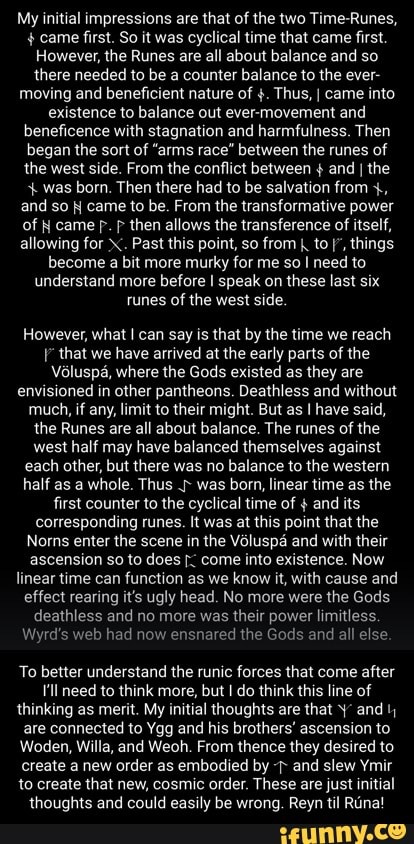
My initial impressions are that of the two Time-Runes, came first. So it was cyclical time that came first. However, the Runes are all about balance and so there needed to be a counter balance to the ever- moving and beneficient nature of +. Thus, I came into existence to balance out ever-movement and beneficence with stagnation and harmfulness. Then began the sort of “arms race” between the runes of the west side. From the conflict between + and | the was born. Then there had to be salvation from +, and so N came to be. From the transformative power of N came P. P then allows the transference of itself, allowing for X. Past this point, so from to, things become a bit more murky for me so I need to understand more before I speak on these last six runes of the west side. However, what I can say is that by the time we reach that we have arrived at the early parts of the Völuspá, where the Gods existed as they are envisioned in other pantheons. Deathless and without much, if any, limit to their might. But as I have said, the Runes are all about balance. The runes of the west half may have balanced themselves against each other, but there was no balance to the western half as a whole. Thus was born, linear time as the first counter to the cyclical time of and its corresponding runes. It was at this point that the Norns enter the scene in the Völuspá and with their ascension so to does come into existence. Now linear time can function as we know it, with cause and effect rearing it’s ugly head. No more were the Gods deathless and no more was their power limitless. Wyrd’s web had now ensnared the Gods and all else. To better understand the runic forces that come after I’ll need to think more, but I do think this line of thinking as merit. My initial thoughts are that Y and are connected to Ygg and his brothers’ ascension to Woden, Willa, and Weoh. From thence they desired to create a new order as embodied by ↑ and slew Ymir to create that new, cosmic order. These are just initial thoughts and could easily be wrong. Reyn til Rúna!
The Divinity of Matter in Zoroastrianism
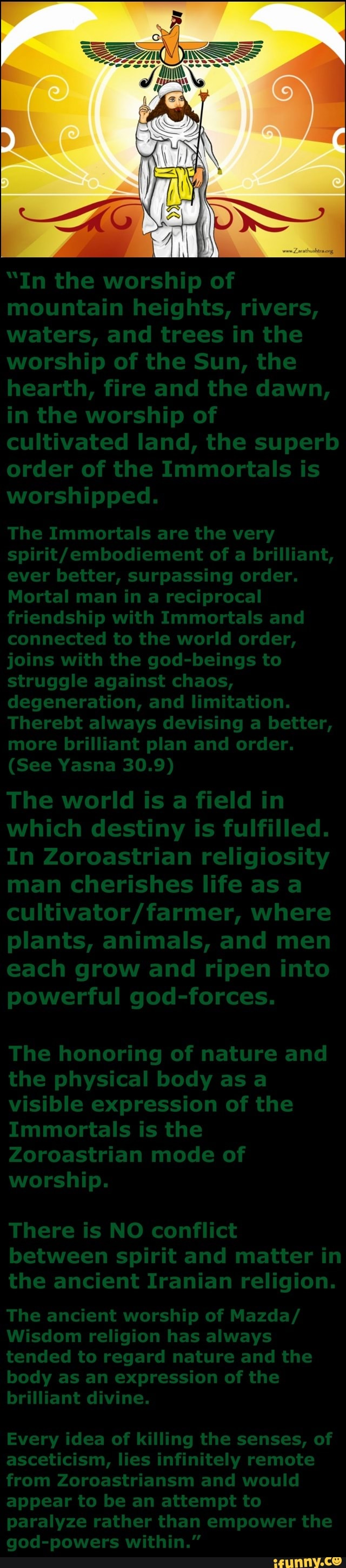
“In the worship of mountain heights, rivers, waters, and trees in the worship of the Sun, the hearth, fire and the dawn, in the worship of cultivated land, the superb order of the Immortals is worshipped. The Immortals are the very spirit/embodiement of a brilliant, ever better, surpassing order. Mortal man in a reciprocal friendship with Immortals and connected to the world order, joins with the god-beings to struggle against chaos, degeneration, and limitation. Therebt always devising a better, more brilliant plan and order. (See Yasna 30.9) The world is a field in which destiny is fulfilled. In Zoroastrian religiosity man cherishes life as a cultivator/farmer, where plants, animals, and men each grow and ripen into powerful god-forces. The honoring of nature and the physical body as a visible expression of the Immortals is the Zoroastrian mode of worship. There is NO conflict between spirit and matter in the ancient Iranian religion. The ancient worship of Mazda/ Wisdom religion has always tended to regard nature and the body as an expression of the brilliant divine. Every idea of killing the senses, of asceticism, lies infinitely remote from Zoroastriansm and would appear to be an attempt to paralyze rather than empower the god-powers within.”
Rune Guides
I decided not to transcribe these, because they are so heavily focused on characters that are not recognized by the image-to-text machine. But I can include pictures
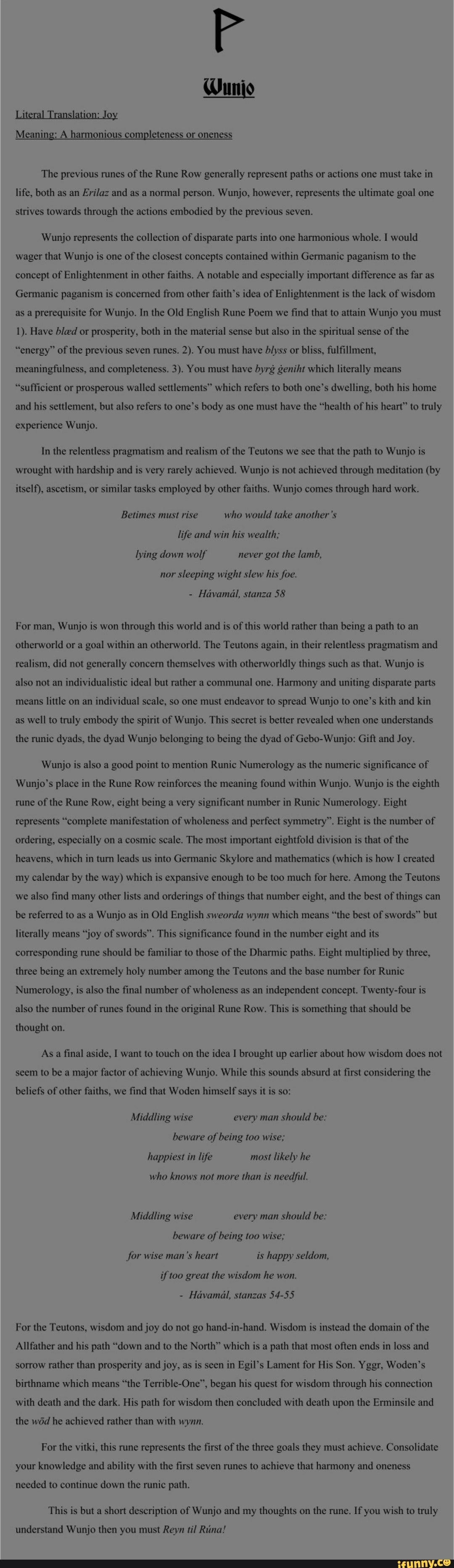
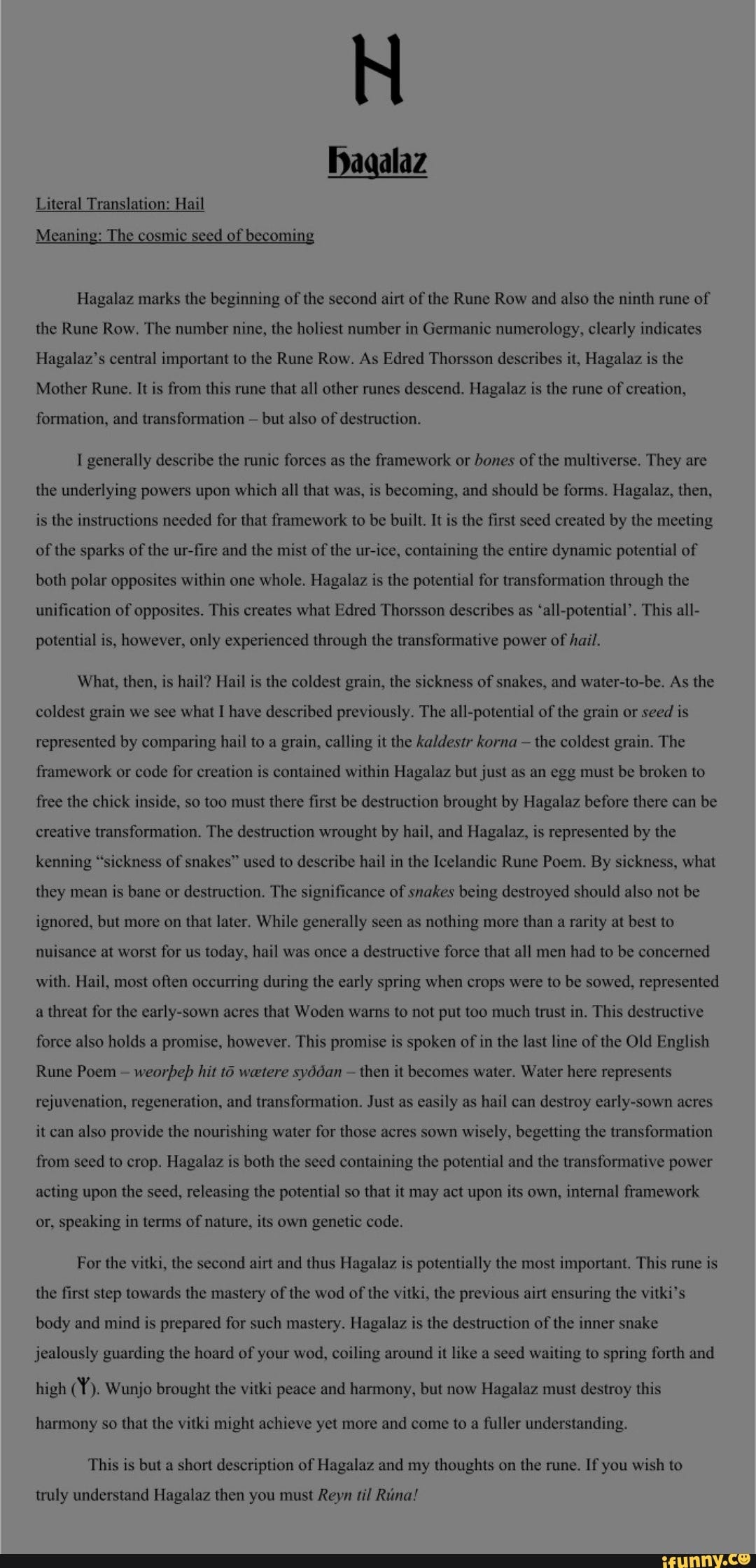
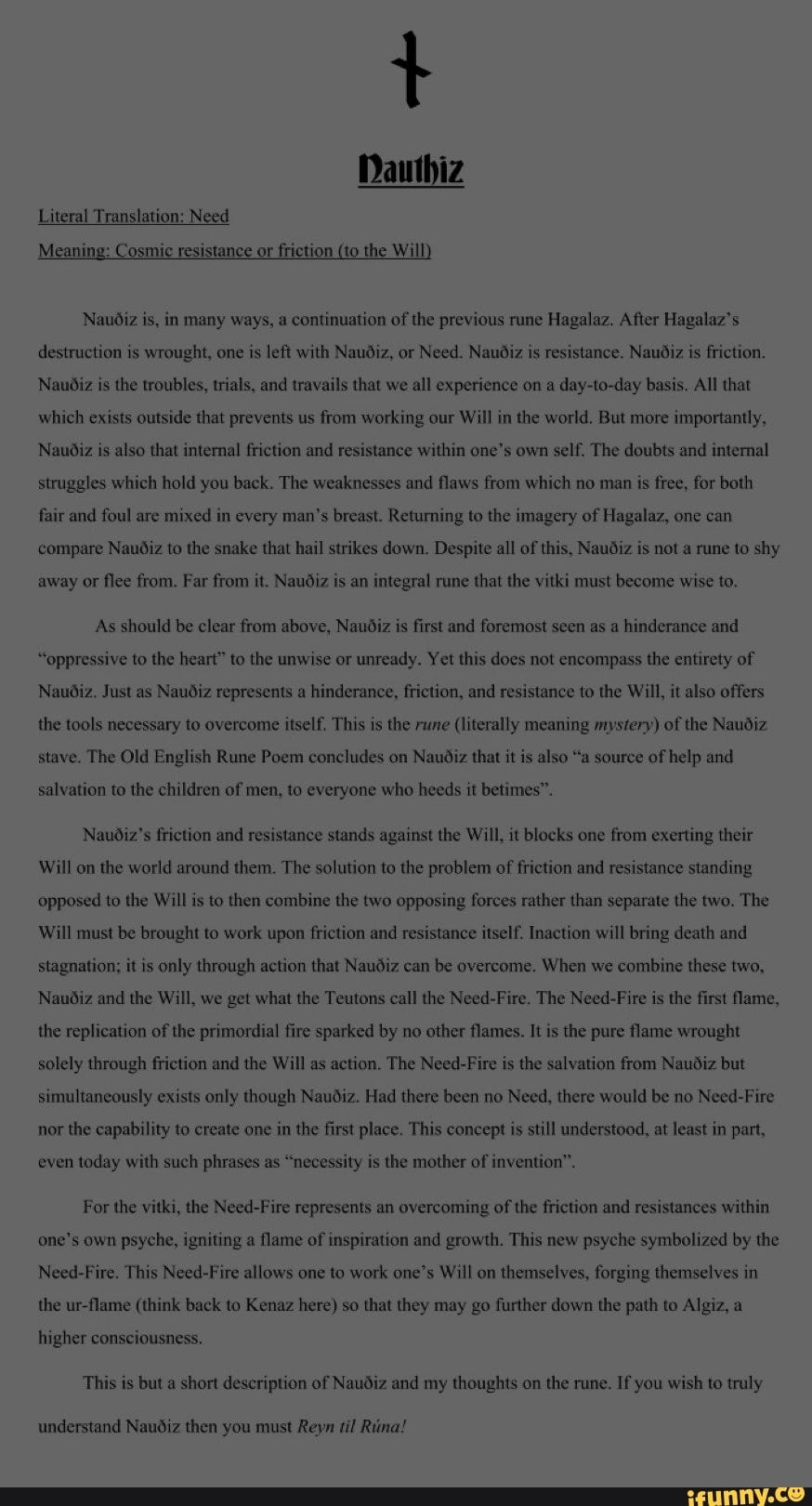
God Jul!
I can ask him if he’d like to make an acc here, although I doubt he’d post much after just a few interactions with this app’s users.
Germanic religion isn’t undeveloped because it doesn’t have a kind of priority monism/cosmophysicism that other IE religions have, but just in general, much of the Germanic religion is undocumented or its finer more nuanced details were only recorded in extremely esoteric druidic circles. I don’t think thats controversial to say, in comparison to the iranic complex beliefs, there is a lot thats left unexplained or not elaborated upon. We never got to see a fully fleshed out system of karma or any ideas of enlightenment due to Christianity. We saw Odins sacrifice on the world tree in pursuit of esoteric knowledge but it wasn’t systematized or formalized like Hinduism and Buddhism. This is to the detriment of Germanic religion because contemporary practioners essentially just decide what the Germans believed and mix it into their Nietzschean or Esoteric Hitlerist belief systems. While “paganism” in general is more decentralized than abrahamic religions, its not good to lack a Orthodoxy or general frame of reference to identify it with. There are plenty of “norse pagans” who basically have a materialistic worldview despite the unlikelihood of ancient Germanic people sharing those ideas.
It’s either reconstructed with Platonism or Hinduism or remains in a kind of dry polytheistic state without much elaboration or explanation cosmically or metaphysically speaking. I think that IE peoples who became sedentary earlier in their history had more time to reflect on things like death, ascension and existential problems like suffering or the incompleteness found in the current configuration of consciousness. We kind of have an indeterminate development and only conjecture exists to determine these finer attributes.