
Easter Special: The Black Sun
Chthonic Solar Deities

It’s that time of year again, where Christians across the world commemorate the death and rebirth of Jesus Christ. As I am not in any condition to participate in Christian rites such as the eucharist, you will not see me in any church on Easter Sunday, but I thought I’d write an article that I feel is tangentially related to the topic. That is, an article on what I am calling “solar chthonic deities”, that is, gods associated with an internal or subterranean solarity, or even an inverted sort of solarity. These gods tie together the celestial heavens and the realm of the dead, often through some sort of experienced death and rebirth on their own part.
We often talk about terms like “Dionysian” and “Apollonian”, but unfortunately the roles of the two deities are drastically over-simplified. Many people seem to think that Dionysian means “passionate” or “chaotic” or “hedonic”, which doesn’t even do the Nietzschean terminology justice let alone the role of the actual deity. I’ve written an article on Dionysus before, and I feel like it still holds up fairly well.
If you don’t feel like reading it, the jist is this: Dionysus is not primarily a god of hedonism, passion, or chaos, especially not in some sort of juxtaposition with Apollo. Both gods were associated with divine madness. Apollo was associated with public displays of religion and human excellence (ex: the games), but it is strange how he became associated particularly with order, restraint, and reason. Music, disease, oracular trances, and poetry are all things that were associated with their own sort of madness, and all of them were the domain of Apollo. Apollo was also seen by the Orphics as the “bestower of Dionysus” who delivered the destroyed remains of Dionysus to Delphi in order to hasten his rebirth. In this sense, he is a savior, as the goal of the Orphics is to achieve an apotheoric rebirth akin to that which Dionysus experienced after being torn to bits by the Titans.
The Dionysian orgia was already deeply connected to the myth of the Orphic Dionysus, who is violently torn up by the titans just as the wine-drunk initiates threw chaotic slashes upon the body of the sacrificial victim, and ate the flesh raw like beasts. Dionysus was not only a character of great importance among his own cult and the Orphic community, but also among the Eleusinians, where he manifested as Iacchus. In my opinion, the difference between the Orphico-Pythagoreans and the Dionysian cultists has more to do with praxis rather than theory, sort of similar to the difference between contemplative/ascetic Yoga schools and Tantra, or the difference between mainstream Buddhist techniques and Vajrayana techniques. In terms of Western Esotericism, the orgia corresponds to the blackening of the soul, the confrontation of darkness, and the symbol of the sol niger… But this (from what I understand) is not the same black sun as the one spoken of by Esoteric Hitlerists like Miguel Serrano. Instead, this refers to the knowledge itself that was transmitted through initiation, which is “black” not in the sense that it is putrefied but more in the sense that it is obscured or blocked from light by virtue of its embedded state. Serrano identifies the icon on the floor of Wewelsburg with the Black Sun because of this, because of the secretive and cultic nature of Himmler’s ideal SS.
The public worship associated with Apollo, and the private worship associated with Dionysus, were complementary to each other and one could not have existed without the other (not that either of these gods was exclusively public or private, of course). Both were connected to a concept of spiritual salvation and protection from death that would typically be associated with later developments in religion.
During the part of the year where no things grew, when Apollo had left for the land of the Hyperboreans, the temple at Delphi belonged to his half-brother Dionysus. Why was this the case? Dionysus is described in cultic hymns as a torch-bearer in the darkness, a literal sun in the night, and subsequently the sun of the underworld and of inner-earth (as at night-time the sun had descended beneath the earth in the traditional flat-earth cosmology of the Greeks). Macrobius says the following about the sun in his Saturnalia:
I first maintained that Apollo is to be identified with the sun, and I afterward explained that Liber Pater is himself Apollo; and so there can be no doubt but that the sun and Liber Pater are to be regarded as manifestations of the same deity. Nevertheless the point shall be established distinctly by yet clearer proofs. In the performance of sacred rites a mysterious rule of religion ordains that the sun shall be called Apollo when it is in the upper hemisphere, that is to say, by day, and be held to be Dionysus, or Liber Pater, when it is in the lower hemisphere, that is to say, at night.
His orphic association with Zagreus, the source of divinity in matter, further legitimizes the interpretation of Dionysus as a sort of “chthonic sun” that resides underneath the world, hidden from ordinary view, but accessible through secret initiation and the achievement of an ecstatic spiritual state. This experience was, among both the Orphics and the Eleusinians, analogous to a sort of symbolic death and rebirth, as the god himself is reported to have died and been reborn at least once, possibly twice. This wasn’t purely a mysterious element of Dionysus, Plutarch (who was a priest of Delphi himself) affirms the existence of the tomb of Dionysus at Apollo’s temple in Delphi. Just as Dionysus was the “sun of the underworld”, he was the wintry Apollon, the two-faced and mutable counterpart to the eternally young and static Apollo.
Dionysus’s role as the “sun of the underworld” is very similar to the position of the Egyptian god Osiris, who is not only dismembered and put back together like Dionysus, but is recognized as the nocturnal counterpart of the sun-god Ra, during the time of the day where the sun was underneath the horizon. It should be no surprise, then, that Osiris developed a popular mystery cult of his own in the Hellenistic world, under the title of Serapis.
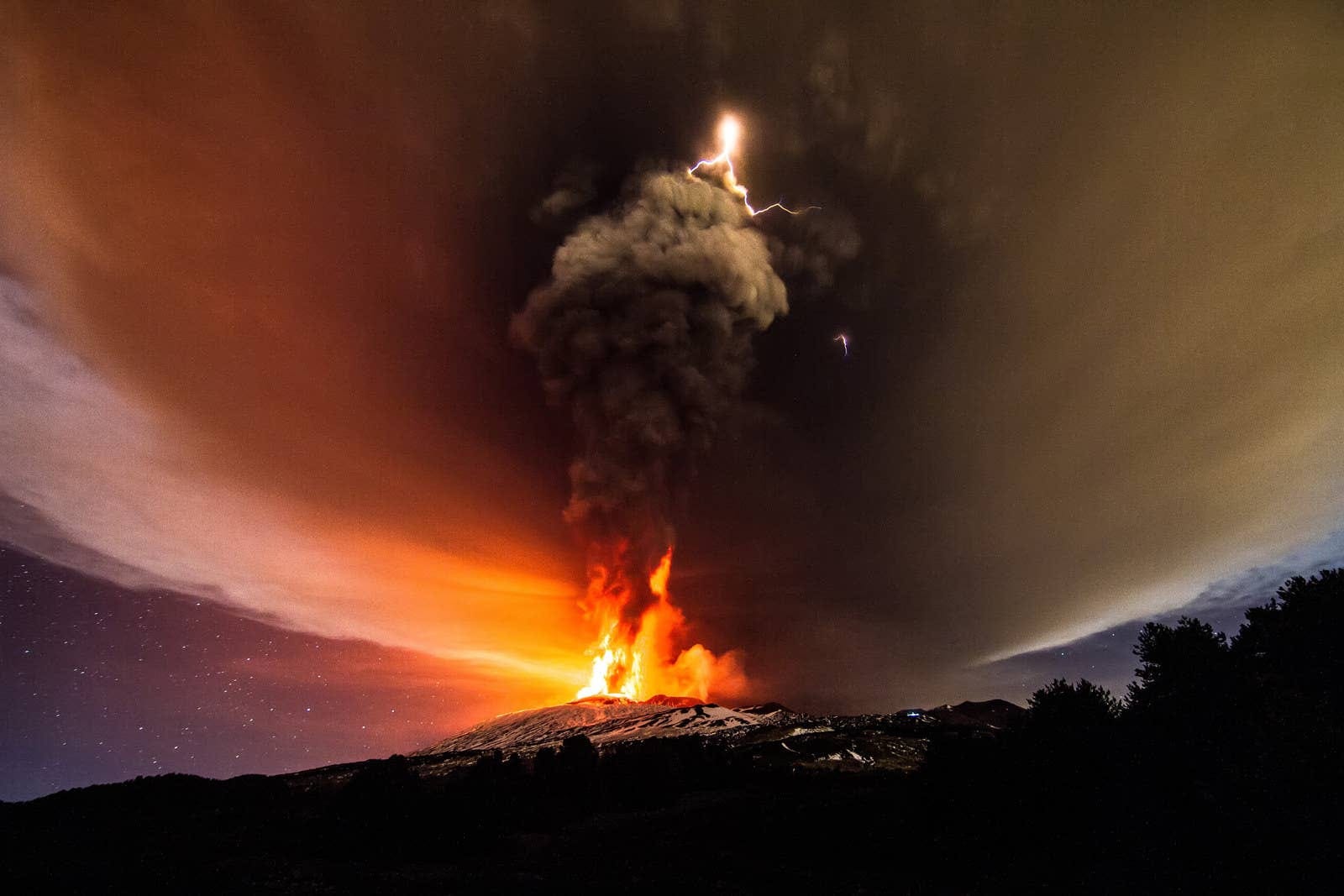
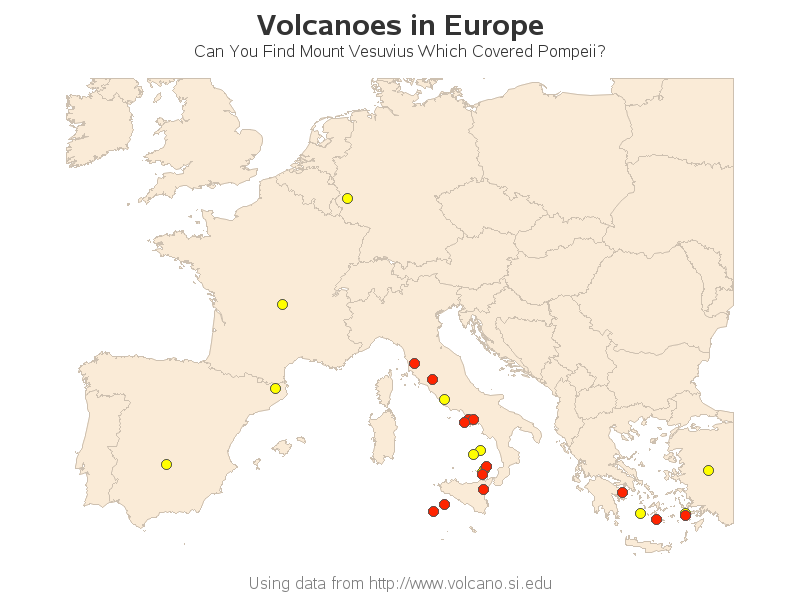
Apollo, when introduced to the Etruscans, became associated with the god Soranus, who is rather un-Apollonian… In the sense of how the term is popularly used, not in the sense of how the god actually existed to the Greeks. In fact, at first glance one might view Soranus as profoundly Dionysian. Soranus is a solar god, but not of the sun in the sky. Instead he is a Chthonic sun, which in Italy manifests as a certain natural feature of the landscape. That is, the volcano! Yes, a literal portal into the internal fires of the world below, which furthermore has the capacity to generate its own light, clouds and lightning (both literally within the plume, and merely apparently in the form of bolts of particulate magma). Soranus is, like Osiris, sometimes depicted as literally burnished black like volcanic rock or charred organic material, although other times he is given a cadaverous paleness... The Volcano has within it all of the characteristics of the sky above, but comes from beneath our feet. Italy is the center of volcanism in Europe, so much so that the very mountain that the gods were believed to dwell on was actually a volcano (Mt. Etna).
The Roman equivalent of Apulu-Soranus may have been either Vediovis, a god with many similarities to Apollo, or Summanus, the old Roman god of nocturnal thunder (and possibly Chthonic thunder?). Vediovis was very likely associated with the transition from life to death, but it is not entirely clear if he was a volcanic deity… The origin of the idea that he was volcanic seems to come from this 1917 journal article, which you can draw your own conclusions from, but it has an interesting conclusion to the question:
All that can be safely predicated of the post-Etruscan concept of Vediovis in so far as it related to life after death, is that he is thought to preside over the passing out of souls in the form of fiery atoms from a place of torment to one of bliss and immortality, wherever that may have been, and that this act could be brought about by the vicarious sacrifice of a goat ritu humano, on behalf of the dead person. At the same time the connection of the goat with Vediovis was probably much earlier than any such association of ideas and goes back to a fairly early Italo-Etruscan ritual.
I think it’s also worth mentioning that the association of Soranus/Apulu/Vediovis with disease (and protection from such) may actually have a volcanic origin itself, as at this time people still believed that diseases spread through vapors and miasmas and whatnot, and the gases of the Volcano are an example of an actual miasma. The origin narrative of the priests of Soranus (the Hirpi Sorani) involves the luring of men to a volcanic crag, where they were poisoned by the fumes. The survivors then brought the foul miasma back to their town, causing plague. Plague was only stopped when some brave men resigned themselves to a lupine life in devotion to Soranus... Yes, another commonality between Soranus and the Greek Apollo was their association with wolves, but the animalistic nature of the priests was not so different from the Dionysian initiates.
Could the expulsion of firebolts from the earth, which the Etruscans apparently considered a unique form of ominous lightning, harken ideas of return or rebirth from the gloomy underworld? Could the Volcano-god of the Etruscans represent the unification of the Dionysian and the Apollonian, the spirit as it is trapped in the dying-and-dead world and its salvation up to the heavens? It will likely never be known, as these gods fell into relative obscurity by the Imperial period, but it’s worth contemplating, even if only for the sake of our own creativity.
On a final note, I should probably talk a bit about the reason for the season… A week or two ago, I got in a short spiff over Will Martin’s claim that Yahweh was a “Jewish volcano demon”. It would certainly be very interesting if he was, especially since the Greeks equated him with Dionysus… But alas, I do not believe this. I believe that Yahweh is equivalent to the Edomite Qos, who is cognate with the Arabian weather-god and archer Quzah… A youthful storm-warrior, the dry thunder of the desert, or perhaps even the miraculous rain in Sinai… Eventually, Yahweh picked up certain viticultural symbols, and became associated with mysteries in the east, which led the Greeks to associate him with Dionysus. He was also assimilated into the Phrygian deity Sabazios, who was considered to be either Zeus of Dionysus, possibly due to the similar-sounding epithet “Sabaoth” which was ascribed to Yahweh. Here is another section from Macrobius’s Saturnalia:
The sun, which men also call by name Dionysus Orpheus manifestly declares that Liber is the sun, and the meaning here is certainly quite clear; but the following line from the same poet is more difficult: One Zeus, one Hades, one Sun, one Dionysus. The warrant for this last line rests on an oracle of Apollo of Claros, wherein yet another name is given to the sun; which is called, within the space of the same sacred verses by several names, including that of Iao. For when Apollo of Claros was asked who among the gods was to be regarded as the god called Iao, he replied: Those who have learned the mysteries should hide the unsearchable secrets, but, if the understanding is small and the mind weak, then ponder this: that Iao is the supreme god of all gods; in winter, Hades; at spring’s beginning, Zeus; the Sun in summer; and in autumn, the splendid Iao.
Iao is a Hellenization of the Tetragrammaton (YHWH). It is probably not unlikely that Macrobius was fully aware of this, as the term continued to be used by Christian and Gnostic writers. I don’t think this is some sort of Christian self-insert, though, as Macrobius is typically not considered to have been Christian at least during the time that he was writing most of his works (despite Christianity being the norm at this point). The association of Yahweh with Dionysus was quite old by this point, being mentioned by Varro and Plutarch centuries prior. I can understand why some people use the Dionysus connection to suggest Christ Mythicism, but it appears to have been a development in Yahwism long before the development of Christianity, especially if you are a mythicist who believes that the story of Jesus was invented post-hoc in the 2nd and 3rd centuries AD. In other words, Yahweh had been a god associated with the grape-vine and mysterious salvation in-himself during the centuries preceding the birth of Jesus, and there is not reason to believe that these characteristics were considered essentially foreign or non-Yahwistic in nature by inhabitants of the Roman Levant. Plus, a lot of the allegedly Dionysian characteristics of Jesus are very much a thing of the book of John, and aren’t as present in the Synoptic Gospels which are nowadays considered older. If Jesus didn’t actually exist, you’d expect the opposite pattern.
Anyways, there are a few other things I could touch on, but I’m going to hand the mic over to the comments section. I hope everyone is having a good easter today, eating good food and whatnot. Cheers.
Interesting poast, as always.
That isn’t the real Will Martin that’s tagged; the real Big Vrilly is shadowbanned so tagging him doesn’t work.
Where does the idea that the sonnenrad is Saturnian come from, is that Jewish propaganda meant to muddy the waters or is there a connection to Saturn in esoteric Hitlerism?